Notes from the 8th Tech Sisters’ networking event

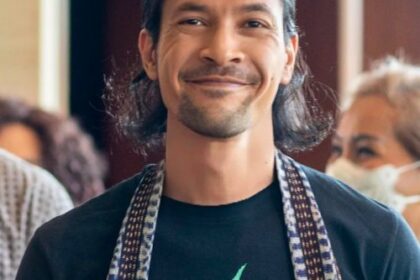
Kristel Viidik and Tiiu Sullakatko
Our 8th networking event this Wednesday was also the last before going for the summer break. We will most certainly continue organizing them in the autumn, though.
This time we had the honour and pleasure of meeting Tiiu Sullakatko from Hooandja and Kristel Viidik from Testlio.
Hooandja is basically an Estonian version of the famous crowd funding platform Kickstarter. People can pledge money in order to fund the project they want to bring to life. (Hooandja currently accepts creative projects and projects associated with civil society or technology.) If they’re able to collect the whole sum by the end of a certain time limit, they have to make their project happen, if they get only part of the budget, the contributors get their money back. Tiiu stressed the importance of the video that must be posted in addition to the written description and the gifts that are offered in return for the donations (for example, when you donate 5 euros for a children’s book, your name will be mentioned in it or you’ll get your own copy of it). If you have a great project you want to find funding for, you can add it to Hooandja free of charge. They take 5% of the budget of your project only in case you succeed collecting the whole sum. So, all in all, there basically aren’t any reasons why not to try it. Even if a project fails at the first time, you still get invaluable feedback, you get to know your audience and the people who are interested in the thing you’re doing. Besides, Hooandja doesn’t keep a black list: if you fail once, you can apply again and hopefully this time you already know what should be done differently in order to succeed.
Kristel also talked about crowds, but in this case, crowds of testers! She studied developing at IT College, but has always had a passion for testing. This is why she and Marko Kruustük have founded Testlio - a community of testers that help companies make sure their products work. Testlio creates real value to testers by giving them extra income and to companies by enabling easy access to crowd sourced testing. Interestingly enough, not many people from our audience knew about the company, although as it turned out, Testlio has been super successful, and we’re not talking about Estonia here, they’ve done big stuff in London and the US. In November 2012, they took their Testlio-idea to AngelHack hackathon in London (it’s considered the biggest hackathon in the whole world!). They were chosen one of the winners and were able to go home with a fat check for 25 000 $. (Read about it on their blog, too.) So we’re not just talking about a good idea here, they have funding, an actual product up and running and paying customers. Quite impressive and certainly worth keeping an eye on them!
Networking evening vol 8
On Wednesday 22nd of May is the last networking evening before our summer vacation. So bring a friend and come listen to one of the founders of Hooandja Tiiu Sullakatko and senior researcher Maie Bachmann, who investigates human brainwaves.
The event starts 18:00 at Garage48 Hub (Rävala pst 7).
Tiiu Sullakatko is the co-founder of creative ideas crowdfunding platform Hooandja. Her goal is to bring closer creators and consumers and give people the chance to fulfil their wildest ideas.
Maie Bachmann is senior researcher at the technomedicum of Tallinn Univserity of Technology. Her primary fields of research are medical technology and signal processing. For example, Maie and her colleagues have developed a method, which enables to discover mental disorders by monitoring and analysing bioelectrical activity of human brain.
TSW #10: Kristi Kuustik

One of our goals at Tech Sisters is to make the great Estonian women who are working with technology more visible thus hopefully creating more diverse role models. Hence the column Tech Sister Of The Week (TSW), where women talk about their work and relationship with technology. Our 10th TSW is Kristi Kuustik, who has studied at IT College and Tallinn University of Technology, taken part in robotics club and is currently working as a programmer at SEB.
What would you say about yourself with 5 sentences?
1. I am the girl you can see with her e-book reader at the cafe or in the bus – I just love to read, especially autobiographies and dystopian books.
2. I am the girl you can see at the gym after work and on her rollerskates during weekends – I just love sports.
3. I am the girl who could die for Blair Waldorf’s wardrobe – I just love her style.
4. I am the girl who loves to dream – one day I will come upon a really great idea that would change the world.
5. I am the girl you can see using Linux on her personal computer and Android on her mobile phone – I just like Tux (the penguin, you know).
How did you discover and first become engaged in technology?
I think it was something I just stumbled upon and luckily I’ve never had to regret it. After graduating from high school there was this horrible period when everybody expected to know what I would do with my life, what I would study next. And I had no idea whatsoever! All I knew was that I liked science more than arts. I then chose three totally different subject fields to apply for and waited, hoping that admission would narrow down my options… and when it didn’t happen, I trusted my gut feeling and just made a lucky pick. IT here I come!
University was hard at first because unlike many of my fellow students I had never had any computer classes and I came from a school that emphasized the importance of languages, history and culture. Sometimes I really felt others had a huge advantage because they already had all the basic knowledge and I had to start from zero but after the first year everything magically became easier. Later It really did not matter what school one came from and you could blame or congratulate only yourself for all the achievements.
Now as a programmer I enjoy what I do. I am like Dr. House – I like puzzles. I like to work hard on a problem and then enjoy the rewarding feeling when I have solved the problem and made something important. I realize that all the hardship in the beginning was because of my own choices but I have never for a second regretted the path I have chosen for myself.
What are your current projects related to technology?
Some would say that my life is boring at the moment because there are no huge projects nor am I studying something at school but I quite like it for a change. Balancing full time job and Master’s studies with personal life was somewhat challenging and I take current period as a well earned vacation which I realise cannot last forever. One needs challenges to spice up their life!
At the moment I just do my day-to-day assignments – make improvements to existing bank systems so that they would be easier and more efficient for cashiers and administrators to use. After work I have some mostly technology-free me-time that I fully enjoy.
What are the top 5 apps you can’t live without?
People lived successfully during the stone age, so I could probably manage without apps. But with all the possibilities out there, four apps I use the most are calendar, mail, alarm clock and some kind of weather app.
What is the most memorable situation you have ever been in concerning technology?
When I was younger I got my mobile phone stolen. Two years in a row at the exact same date. Coincidence?
After years of use my old laptop broke down. Its USB 2.0 started working as USB 1.0, plastic parts just kept falling off and finally touchpad died. I tried to change the touchpad (because of that the laptop was taken apart a couple of times and since every time it turned out the “new” touchpad did not fit, it was again reassembled). The touchpad was still dead. I then gave the laptop to my parents to use with a mouse as a desktop computer and after a couple of months I got a phone call from them saying that the touchpad had spontaneously come to life. Maybe it just did not like me as its user anymore?
What was the last interesting technology event you attended/participated?
There have been a couple of trainings/events during past year but none of them has stood out enough to mention here. The last really interesting technology event was Rails Girls Tallinn in 2012. I enjoyed its friendly informal atmosphere and was in awe of all the enthusiastic women there who were eager to learn something new.
Does our current education system support female techmakers?
I am not one of those who believe we have a huge problem with discrimination against women. If a young person wants to enter the technology world, the gender really does not matter. We could ask whether our education system supports techmakers in general but that would be a totally different subject in which I do not feel competent enough to take a stand. I think that the opportunities vary greatly depending on the specific school curricula but that is not the question of our education system rather than young persons’ (or parents’) preferences while choosing the high school.
If you could make a video/computer game, what would it be about?
It would be something strategic and true to life. Something that in the end would make you feel like you had achieved something or done something great.
Notes from the 7th Tech Sisters’ networking event

Photo by Katrin Loodus
Our 7th networking event was less entrepreneurial and more academical than usually. Jana Holmar talked about her research at the chair of medical physics at the Tallinn University of Technology and Katrin Loodus shared her journey from thinking of becoming a doctor to her present job at IT College.

Jana Holmar. Photo by Katrin Loodus
Jana Holmar is a doctoral student and research scientist at Tallinn University of Technology’s department of biomedical engineering. Her doctoral thesis’s title is “Optical monitoring of removed uremic toxins during dialysis” and although it may sound rather cryptic, Jana somehow managed to actually explain us what it’s all about. First of all, let us all recall what our kidneys are good for. Their main function is to eliminate waste material and toxins from our blood and to regulate body fluids’ balance. When something goes wrong with them, we might have to face kidney failure, which in turn causes many concurrent health problems. There will be two choices: either a kidney transplant or blood-cleansing treatment called dialysis. For many reasons, dialysis (hemodialysis to be exact) is the more common way to go. Most patients get 3 hemodialysis sessions per week and each session lasts 3-5 hours. During dialysis blood flows through filter and excess fluids and toxins are removed from blood to dialysate.

Hemodialysis machine. Photo by Patrick Glanz
To find out whether something should be changed during the dialysis (i.e. perhaps the session should be shorter or longer), patients’ blood is being tested a couple of times a month. When you consider how frequently patients go through dialysis, you might think the blood should be tested more often than that. But this would take time, resources and it’s not very pleasant for the patient. That’s why Jana and her colleagues have come up with a method to optically monitor the toxins that are removed during the dialysis. Different molecules absorb (and sometimes emit) light at different wavelengths and measuring the signal at these wavelengths makes it possible to find out exactly which toxins have been removed from the blood (this is, of course, very superficial and not totally accurate explanation). This in turn gives information about the quality of the blood. In reality, this means that a small gadget is inserted to the dialysis machine and it’s assigned to measure optical information of spent dialysate and monitor its contents. This method is already used in a couple of hospitals (although not in Estonia) and some for patients this has meant that instead of spending, say, 5 hours for the dialysis, they actually only need 3 hours per session. Or contrariwise, some patients maybe need much longer/frequent procedure for sufficient toxins removal.
Jana’s presentation made us all a bit thoughtful. After all, kidney failure is one very grim subject matter. But maybe we all needed a small reminder that kidneys are worth taken care of. Get some exercise, eat healthy food and avoid consuming too much food and drinks that create uric acid (a final product of the metabolism of purine) during the metabolism (i.e. beer, saturated fats, glucose fructose syrup).

Katrin Loodus. Photo by Mart Mangus
Katrin Loodus has always been driven by the need to help others. At first, she thought becoming a doctor would be the best way for finding expression to this urge. Well, this didn’t happen and Katrin went to IT College instead. But administrating IT systems is kind of like curing computers, so you can say she actually did become a doctor in a way! Anyway, her studies began with failing at a course that taught MS Word. Not a fabulous starting point, but Katrin didn’t even consider giving up at that point. Her first job was to take care of Estonian Business School’s computer class. No one else seemed to fancy keeping an eye on it on Friday and Saturday evenings, but Katrin saw the opportunity to get her homework done during these hours. She continued her career as an IT systems analyst. During the two years she understood that it’s not something for her. So she changed workplaces and continued her journey at the ministry of finance as a sysadmin. There are lots of stereotypes about sysadmins and Katrin certainly didn’t do any of them justice: she was active, sociable and talkative. Although she could help people as she had always dreamed, this job still wasn’t quite right for her. During the time she spent there, she turned into a workaholic, who was unable to tell the difference when her workday ended and free time started. Getting an emergency call in the middle of the night wasn’t anything extraordinary back then. At one point, she had enough of it and quit. Katrin’s next job was at IT College as a guest lecturer. She’s been teaching Linux and storage systems for almost two years now and this seems to be something she really enjoys and is good at.
Since Katrin is such an active person, it’s pretty obvious that working isn’t the only thing she keeps herself busy with. She’s one of the co-founders and board members of Tech Sisters and she’s taken part of Rails Girls first as a learner and then already as an organizer. For 1,5 years, she was the driving force behind Linux User Group (she’s been a Linux enthusiast since she was 15!). Katrin has also been part of IT College’s robotics club. She first went there with her roommate just because there weren’t any girls building robots back then. Katrin’s team was the first all-female team to take part of Robotex. She’s also been part of art projects (exhibition “Kikerikiik”, warm carpet in collaboration with Estonian Academy of Arts’s student etc).
TSW #9: Miina Sikk
One of our goals at Tech Sisters is to make the great Estonian women who are working with technology more visible thus hopefully creating more diverse role models. Hence the column Tech Sister Of The Week (TSW), where women talk about their work and relationship with technology.This week, a former psychology student and an avid robotics enthusiast Miina Sikk is the one answering our questions. She’s currently working as a software developer at a start-up called SportID.
Usually the first thing I do in the morning, is turning my computer on and the last thing before going to sleep, is turning the computer off.
During the school, I missed a lot of classes because I stayed home playing computer games.
I believe that people are most pleased and effective when doing the things they like - after the school I decided that I’m going to try different things until I find the thing that really suits me - before “finding” technology and programming, I tried music, psychology, economy, history, dancing.
Before starting studying programming, I was choosing between photography, coreography and programming.
The only reason why I want to live as long as possible is that there are so many interesting new things to know and so many different places to visit.
Networking evening vol 7
On 17th of April, 18:00 at Garage48 Hub (Rävala pst 7).
Spend an educating and inspiring evening with us, because yet again we have some awesome ladies speaking!
Update on 11th April: Tiiu Sullakatko just got added to our speakers list!
Update on 15th April: Saskia Kiisel can’t join us, so Katrin Loodus will be speaking instead:)
Jana Holmar works as the Early Stage Researcher in the Department of Biomedical Engineering at Tallinn University of Technology. Her research is centered on optical measurement of creatinine in spent dialysate. Sounds complicated? No worries, she will tell you all about what does it mean and why it is important.
Katrin Loodus is a lecturer at Estonian IT College and she is studying for her Master’s degree in Business Information Technology at Tallinn University of Technology. In addition to being the co-founder of Tech Sisters, she has also worked as a database administrator and has been part of the winning team at Robotex competition.
Tiiu Sullakatko is the co-founder of creative ideas crowdfunding platform Hooandja. Her goal is to bring closer creators and consumers and give people the chance to fulfil their wildest ideas.
Saskia Kiisel is the fresh chairman of Estonian Internet Community (kogukond.org) and her goal is to make everything related to internet more understandable for everyone and to make sure people know when and how to stand for their cyber rights!
Notes from the 6th Tech Sisters’ networking event
Our 6th networking event must have been the first to have foreign speakers present, but that doesn’t mean the local ones were any less exciting. If you didn’t have a chance to come by this time, here’s a short account of what you missed!

Oksana Naidjonova. Photo by Katrin Loodus.
First up was Oksana Naidjonova from Skype. She’s currently senior IPE (international project/product engineering) Lead at the Skype division in Microsoft. To understand, what does that cryptic title mean, let us start from the beginning.
Although Oksana spent her childhood close to Tallinn, she didn’t have the vaguest idea about the world where Estonian was spoken, since she only heard Russian in the neighborhood. At the same time, her mother was teaching Russian in an Estonian school and Oksana’s grandma used to teach Chinese during the Soviet time. Oksana’s uncle (do correct me if I don’t remember it correctly) was a sailor and told her about all those far away nations and different people all around the world. That made little Oksana wonder how can the world work so well if everyone is so different.
By the time she was ten, she had gone through most of the linguistics-related literature her family had at home. She was going to an Estonian school and by the age of 13 her Russian, Estonian and English were good enough to start her own little translating business on the Web. Because, well, you can be anyone on the internet and nobody knows you’re only 13 year old schoolgirl.
After graduating came the moment she had to decide on her future plans. Plan A was to become a pilot. Well, that didn’t happen, but plan B wasn’t that bad either - she ended up studying Russian and Slavic philology at Tartu University. After all, she was so keen on languages, why not use the chance to learn about a few in depth. Unfortunately, by the end of the first year, Oksana was already bored. Imagine starting your studies at an university, only to find out that you’ve already read all the necessary literature… when you were in elementary school! So this is how diligence pays off.
Oksana decided to abandon Tartu and the university for a while and returned to Tallinn to start working at Tupperware. Her job title was translating coordinator. She had been translating the whole time she was in the uni, so this was already something she was very comfortable doing. Already back then, Oksana was interested in more than just words - she noticed the context and saw that translating isn’t enough to make something work on a global scale. For example, Tupperware catalogs included photos of dishes and meals that were unknown in Estonia. This doesn’t obviously improve sales.
She continued to translate on her spare time, while working at Tupperware, which meant that she was working about 8+8 hours a day. This is when she noticed the blue ads all around the city that invited people to apply for a position at Skype. Well, that looked exciting. But she was slightly intimidated as well, because, after all, she was only 21 years old and didn’t have an university diploma. But she applied and after four interviews, she got the job. Skype had this pure startup vibe back then and a lot of translating work had been done by volunteers. All good, but the quality wasn’t as even as it should and could have been. Oksana took matters in her own hands and she was soon promoted from translation quality manager to team lead. She began searching for partners all around the world, to adapt Skype to everyone’s local needs. Just think about how varied are the ways people address each other in different cultures. In Estonia you might use the given name, in China that would be unheard of. How many new users would you get when trying to sell Skype in Middle-East, using half-nude women wearing bikinis? Things don’t work the same everywhere and translation is only a part of adapting Skype to different cultures and customs. This in turn has a huge influance on the success of the product.
And this is how Oksana’s team grew to become the localisation team, that in turn grew into an international team.
She couldn’t share any big screw-ups with us, but one fail she did tell us, was about one Microsoft Windows product package. It included a world map, but a few pixels had been messed up, which meant that the border between South Korea and North Korea wasn’t exactly how it should’ve been. Microsoft had to call back all the packages.

Merle Lindma. Photo by Katrin Loodus.
Our next guest was Merle Lindma, who’s currently the human resources manager at Skype Estonia. Her previous work experiences include being HR at Microsoft and working in business industry, although according to her university diploma, she should’ve been math and physics teacher. Since she’s not an IT person, her task in the hiring process is to find out how passionate is the applier and what kind of attitudes they have.
I think her life and career philosophy can be summarized with the same quotes she used in her own talk.
- Everyone has the right to choose where and what to do. When it comes to human resources, it goes two ways - just like the people who have to decide whether to hire someone or not, the potential employee should know what and where they want to do.
- You don’t live forever. Merle came to this realisation when she got 40 and this is when she abandoned her career in banking. She had always loved people, so a position in Microsoft’s human resources wasn’t something very unexpected.
- You can’t be smarter than you are.
- People hire attitudes and values, not necessarily skills. Values are something that you either have or you don’t, unlike skills that can be taught and learnt. When looking for a job, make sure you share the same values as the company you are interested in applying to. Even if you get hired, while not sharing the same attitudes as the employer, you can’t deceive yourself for a long time, it will come out eventually and then everyone will be unhappy.
Think about it the next time you’re at an interview and you are asked to give three good reasons why you should be hired and three reasons why you shouldn’t be hired. Take it as a good chance to show off you values and maturity. - You are your own greatest creation.
- If you’re not part of the solution, you’re part of the problem.
A subject that came up in connection with women, was the enormous gender pay gap in Estonia (it’s around 30% these days). That means that women earn on average 70% of the men’s wage. Lots of people and institutions can be blamed for that, but the fact is that women ask less than men. According to Merle, women can ask as much as 20% less than men, while Oksana added that the percent can be as big as 40. Why is that? Is it because women prefer less risky behaviour and therefore are willing to accept being paid less, if it increases the chances to get the job? It will take a very long time for things to change if women won’t take that risk and won’t learn to evaluate their skills and worth adequately. Take the time to do some research: how high are the wages in the sector you are interested in, how much do the people on similar positions earn etc. There are companies who are going to pay you as much as they planned for the wage on a certain position, even if you asked for less, but don’t take that for granted, yet.
I personally think people like Merle are the reason why you should come to our networking events instead of reading about it later. I have trouble putting her positive and inspirational aura in words, but I’m pretty sure she didn’t leave anyone indifferent.

Sesselja Vilhjalmsdottir and Vala Halldorsdottir. Photo by Katrin Loodus.
Last but totally not the least were Vala Halldorsdottir and Sesselja Vilhjalmsdottir, the creators of The Startup Kids documentary. As you probably already know, they’re Icelandic entrepreneurs with a passion for entrepreneurship and tech. This time they had a bit more time to talk about their entrepreneurial adventures than after the film screening on Monday.
First there was the economical crisis that hit Iceland in 2008 and 2009. Vala and Sesselja had gone to school together and when Sesselja came back from the US in 2009, they came up with a boardgame idea. The girls explained that boardgames are super popular in Iceland especially during the Christmas season. This is why they put all their effort in releasing the game before the holidays. They used every thinkable and unthinkable way to get enough money to produce the game in China. The stakes were high, because even their grandmas chipped in and who would want to disappoint their grannies during the festive season!? Obviously no one. So, everyone involved held their breath and just five days before Christmas the boardgame arrived from China. It was sold out during the next five days!
Their next adventure was producing “The Startup Kids”. Vala and Sesselja got funding from the European Union and bought one-way tickets to New York. Their initial goal was to concentrate on the differences between entrepreneurship in Europe and the US. Vala and Sesselja visited New York, San Francisco, London, Berlin, Copenhagen and Stockholm and conducted around 80 interviews (14-15 made it to the final cut). At one point they ran out of money, which led them to upload the movie trailer to Kickstarter to find additional funding. Maybe things hadn’t gone as well as they did, if TechCrunch hadn’t published an article about the movie and its producers (one reason behind the decision must have been the fact that the guy at TechCrunch was featured in the movie himself). Anyway, it only took five hours to get enough funding to continue shooting the movie.
The movie turned out to be a great way to learn about founding and running a start-up. They used the know-how they had acquired to found their own start-up. It’s an iPhone app that could be described as a real life Sims game. The app turns the user’s life into a game: instead of checking in locations, you check in actions, you acquire new skills and have to balance them. So you could say Vala and Sesselja’s activities are aimed to gamifying real life.
When talking about their future plans, the girls said they want to continue with “The Startup Kids’” brand, but the two of them won’t be enough to run all this anymore. So we can anticipate more people getting involved in perhaps producing similar movies, like “Startup Asia” or even “Startup Estonia”. Anyway, it looks like we should be keeping our eyes on their doings, because looks like they have a lot of interesting to offer in the future.
I promised a short account in the beginning, oops. Sorry for letting you down if you came here for a quick overview. I just got carried away while recalling the stories of those inspirational ladies and, as a philologist myself, I got especially immersed when writing about Oksana’s story.
Tech Sisters featured The Startup Kids
On Monday, the 25th of March, a dream we’ve had for a long time finally came true: “The Startup Kids” was screened at Kino Sõprus. The event was part of the MIT Global Startup Workshop 2013 unofficial programme. The audience seemed to enjoy the movie a lot, bursting into homeric laughter in unison and seconds later becoming thoughtfully quiet again.

Since the directors of the movie, Vala and Sesselja, were also present, we had a short Q&A arter the screening. As it turned out, it’s not that easy to find successful people in the top of the startup world ladder, if you can begin your phonecalls, saying „We are two girls from Iceland…“. Out of all the 80 calls, they were rejected only once. Since not all the interviews didn’t make it into the film, we can only hope that Vala and Sesselja find a fascinating use for those that were left out this time. Until then, go to iTunes to watch The Startup Kids, if you hadn’t had a chance to watch it yet!

Thanks again to everyone who came, especially our special guests Vala and Sesselja and our sponsors Enterprise Estonia Startup Estonia programme, Toggl and EstBAN. Since the event was such a success, we might surprise with something similar in near future ;)
Networking evening vol 6
On 27th of March, 18:00 at Garage48 Hub (Rävala pst 7).
In addition to our local tech ladies Oksana Naidjonova and Merle Lindma, we have two special guests from Iceland - Vala Halldorsdottir and Sesselja Vilhjalmsdottir, whose movie The Startup Kids you can see for free on 25th of March at Kino Sõprus (read more about it here).
Vala Halldorsdottir (@valgerdur) and Sesselja Vilhjalmsdottir (@SesseljaV), the creators of The Startup Kids documentary, are Icelandic entrepreneurs with a passion for entrepreneurship and tech. They began working together in 2009 when they started a board game production company and made the best seller board game Heilaspuni. Now they are working full time on KinWins, a mobile application that turns your whole life into a game.
Although Oksana Naidjonova studied Russian and Slavic philology in the university, she has now become the Senior IPE (international project/product engineering) Lead at the Skype division in Microsoft. What a Senior IPE Lead does, how her work looks like and how she ended up in Skype, this is all something you can find out from her in person.
Merle Lindma is the Human Resources Manager at Skype (Microsoft). Having years of experience helping executives and team leads manage employees to get better business results, she has a very clear idea what kind of people are needed and wanted in the tech sector. She has a studied physics and mathematics and has MBA in business administration and in her spare time likes to read and learn Spanish.
The talks are all in English.
TSW #8 - Kristina Narusk

One of our goals at Tech Sisters is to make the great Estonian women who are working with technology more visible thus hopefully creating more diverse role models. Hence the column Tech Sister Of The Week (TSW), where women talk about their work and relationship with technology.
This week’s Tech Sister is Kristina Narusk, who has a long history of developing technology and software products, but currently has taken a new challenge as the executive director in the Estonian Service Industry Association (Teenusmajanduse Koda). She has also been involved from the very beginning with the very successful Estonian startup GrabCAD and led its development team.
How would you describe yourself in 5 sentences?
I’m extremely curious, especially about larger scale systems, principles, patterns and behaviour.
I breathe everything that has potential to create high value. Integrity, straightforwardness and British type of sense of humour are probably the first three characteristics I appreciate the most.
I could not live without travelling, books, good coffee conversations and friends with years of history (yes, sounds cliche, but so true). And yes, I do think Instagram was bought for ridiculous amount of money that should have been donated to 3rd world projects.
How did you discover and first become engaged with technology?
By accident. I got my first job in a software development team because
(not despite!) I was a girl. I knew nothing about code, but learned the basics of HTML and scripting during the first week of work. It was a ‘downfall’ from there :) It felt pretty nice to build stuff for other people and to come up with solutions that would affect the work of many.
I also did quickly learn to work in a male dominated environment that is pretty standard in IT, got too used to that and even until today can not imagine working full time in any other type of team.
Start-ups, apps, projects you recommend to follow or are especially fond of?
As a first thing, I would actually recommend to be very receptive to news from any industry. IT is just a tool to communicate innovation, a language that enables to think in ways that previously were unheard of.
At the same time, I tend to check out new Kickstarter projects and I keep an eye on services just to learn how they change their functionality or target customer or pricing. I’m a huge fan of Vimeo, just because they have succeeded to grow into serious product, to keep the content incredibly high quality and it’s interesting to follow their revenue model experiments.
Anything related to 3D printing is exciting to follow, not just because of my GrabCAD background, but also because of the possibilities it creates for so many industries. My latest discovery was FlightFox - crowdsourced flight tickets search site. It’s a startup and amazingly, it works.
What characteristics have helped you to succeed in the tech world?
Having good intuition, multitasking skills, focusing on results instead of relationships. I once wrote a longer brain dump on that topic on Quora.
What is the biggest problem you have ever come across concerning technology?
I consider myself an early adopter, so to be honest, the biggest problem has usually been having to drag the friends and acquaintances along to adapt the new stuff as well :) Only a couple of days along I taught one of my long-time friend how Skype group calls work and I’m not joking.
What was the last interesting technology event you attended/participated?
It must be any of the geeks networking evening events in Boston last year. When you have environment where all the next Facebooks and LinkedIns office buildings are constructed, that means a LOT of tech people around. Americans tend to share experiences significantly more than we over here which means you hear many interesting stories about platform building, issues with Rails, how to scale enterprise solutions and what not.
What is the best advice anyone has ever given to you?
Those who endure, reach the furthest.
The best advice I have given myself is that the morning you wake up and hate the thought of spending the next 5 years like yesterday, it’s time to make changes.
What is the most exciting part of your work?
People and the opportunity to change things.